

Climate and Fungi (CLIF) Symposium II
The Climate and Fungi (CLIF) Research Group invites you to Duke University’s second annual symposium addressing climate impacts on fungal biology, ecology, health and human disease.
Featured speakers include researchers with pioneering work in the following areas: fungicides and the emergence of drug-resistant environmental fungi, thermal stress adaptation by pathogenic fungi, epidemiology and spread of endemic mycoses, and fungal-plant relationships mediating stress tolerance in agriculture. The symposium will also feature a poster session with dedicated time for trainees to showcase their research projects for discussion and engagement with the extended scientific community.

Friday, May 29, 2026
8:30 am to 5:00 pm,
LSRC B101 Love Auditorium
Duke University, Durham, NC 27710
In-person registration is now closed. To attend virtually, please email siobhan.duffy@duke.edu
Agenda
8:45 - 9:00 AM: Welcome
Fungal resistance and adaptation in a changing climate
| Time | Speaker |
|---|---|
| 9:00 - 9:45 AM |
The development of antifungal resistance in agricultural environments |
| 9:45 - 10:30 AM |
A temperature-responsive translatome enables fungal adaptation |
| 10:30 - 10:45 AM | Break |
Fungal-plant partnerships for climate resilience
| Time | Speaker |
|---|---|
| 10:45 - 11:30 AM |
Fungal facilitators: Leveraging plant symbionts to enhance resilience in a changing climate |
| 11:30 -12:15 PM |
From RNA Biology to Fungicide Discovery: RNA-Based Innovations for Sustainable Plant Protection and Environmental Stewardship |
12:15 - 1:15 PM: Lunch
Emerging voices in climate and fungal research
| Time | Speaker |
|---|---|
| 1:15 - 1:30 PM |
CLIF Hurricane Helene project update |
| 1:30 - 2:15 PM |
Trainee flash talks |
2:15 - 3:15 PM: Poster session with mycofood
| Speaker | Institution |
|---|---|
|
Erick Figueroa Ildefonso |
Duke University |
|
Connor Larmore |
Duke University |
|
Kayla Wilhoit |
Duke University |
| Jason Mohabir | Duke University |
| Eduardo Caro | Duke University |
|
Brianna Jamison |
North Carolina State University |
| John Cheadle | North Carolina State University |
| Brianna Almeida | North Carolina State University |
| Hannah Sedler | North Carolina State University |
| Maria Higuita | North Carolina State University |
| Priscilla Atim | Virginia Tech University |
The emerging landscape of fungal diseases
| Time | Speaker |
|---|---|
| 3:15 - 4:00 PM |
The role of climate change and other environmental disturbances in the emergence and expansion of endemic mycoses in the U.S. |
| 4:00 - 4:45 PM |
Monsoon Mycoses: the Rising Tide of Talaromycosis in Southeast Asia |
4:45 - 5:00 PM: Closing remarks
Keynote Speakers

Alejandro Arevalo, PhD
Head of Fungicide Discovery, GreenLight BioSciences
Alejandro Arevalo currently leads the Global Discovery efforts focused on early RNA interference–based solutions for plant disease management at GreenLight BioSciences. He has over 20 years of experience in agricultural innovation across industry and academia, with a strong record of building high‑performing research teams and shaping strategic discovery pipelines. His work has contributed to the launch of multiple commercial products, including four novel modes of action recognized by IRAC and one by FRAC. Alejandro holds a MSc. & PhD in Entomology from the University of Florida, a master’s in Project Management from Georgetown University, and has held discovery leadership roles at UPL and BASF, consistently advancing sustainable, science‑driven solutions for agriculture.

Christine V. Hawkes, PhD
Distinguished Professor, Department of Plant and Microbial Biology, North Carolina Sate University
Christine Hawkes joined NC State in August 2018 as a Chancellor’s Faculty Excellence Program cluster hire in Microbiomes and Complex Microbial Communities. Hawkes is a professor in the Department of Plant and Microbial Biology, where she works to understand both plant and soil microbiomes. For example, all plants are home to fungi living in their leaves and roots, some of which can benefit the plant. Hawkes studies how these symbiotic fungi affect the ability of plants to tolerate stresses such as drought through ecological, physiological, genetic and chemical pathways. She also addresses the questions that affect our ability to use symbiotic fungi as tools in agriculture, such as where they are found and what drives their distributions, how fungi interact with each other in the plant, and how they assemble into communities.
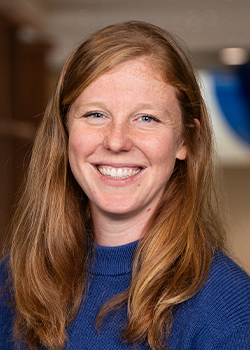
Jennifer Head, PhD
John G. Searle Assistant Professor of Epidemiology, University of Michigan
Jennifer Head is the John G. Searle Assistant Professor of Epidemiology at the University of Michigan and a member of the Institute for Global Change Biology. Her research applies mathematical and statistical models to understand the impact of climate variation, environmental disturbances, and zoonotic hosts on infectious disease dynamics. A major focus of her work is on the emergence of environmentally acquired fungal infections, including Valley fever and blastomycosis. She collaborates closely with state and federal health agencies to help convey findings into actionable public health outcomes.
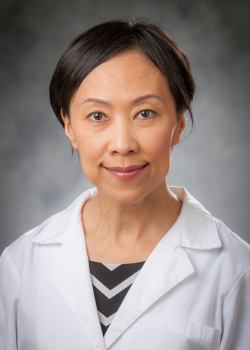
Thuy Le, MD, PhD
Associate Professor of Medicine, Duke University School of Medicine
Dr. Thuy Le is an Associate Professor of Medicine and Associate Professor of Molecular Genetics and Microbiology at Duke University School of Medicine. She co-directs the Clinical Core of the Duke Center for AIDS Research, and co-directs the NIH-funded Tropical Medicine Research Program for Talaromycosis in Vietnam. Her research focuses on the development and validation of novel non-culture-based diagnostics and novel therapeutic strategies for talaromycosis, a severe HIV-associated fungal infection endemic in Southeast Asia. Her passion in the translation of knowledge and technologies into real-world disease control and prevention strategies has placed her at the forefront of national and international leadership in the fields of HIV, Medical Mycology, and Global Health.

Michelle Momany, PhD
Professor of Fungal Biology, Department of Plant Biology
University of Georgia (USA)
Dr. Michelle Momany is a Professor in the Fungal Biology Group and the Department of Plant Biology at the University of Georgia (USA) where she has also served as department head for Plant Biology and associate dean for Life Sciences in the Franklin College of Arts & Sciences. Her research group investigates development and antimicrobial resistance in the human pathogen Aspergillus fumigatus and the model organism Aspergillus nidulans. The Momany lab demonstrated that genetically identical mitotic spores can show phenotypic variation influenced by sporulation environment, and, in collaboration with Marin Brewer’s lab, was among the first to show that pan-azole–resistant A. fumigatus also carries resistance to fungicides used exclusively in agriculture and that azole-resistant strains are widespread in the United States. She is a fellow of the American Academy of Microbiology, the American Association for the Advancement of Science, and the Mycological Society of America and has been named a National Academies Education Fellow in the Life Sciences and a University of Georgia Women’s Leadership Fellow.
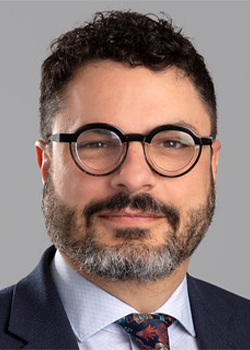
John C. Panepinto, PhD
Professor of Microbiology and Immunology, Senior Associate Dean for Biomedical Education
Jacobs School of Medicine and Biomedical Sciences, University at Buffalo
John C. Panepinto, PhD, is a professor of Microbiology and Immunology and Senior Associate Dean for Biomedical Education in the Jacobs School of Medicine and Biomedical Sciences at the University at Buffalo. Dr. Panepinto has spent his training and career working on pathogenic fungi, beginning with studies of nutrient sensing in Aspergillus fumigatus with Dr. Judith Rhodes at the University of Cincinnati. Dr. Panepinto continued his fungal path in his postdoc training with Dr. Peter Williamson at University of Illinois at Chicago, where he began work on post-transcriptional regulation of stress adaptation that has continued in his independent career, focusing on the molecular mechanisms employed by C. neoformans in adaptation to thermal stress and other host- relevant stressors.
Symposium Planning Committee Members
- Asiya Gusa, PhD, Assistant Professor, MGM (Planning Co-Chair)
- Erica J. Washington, PhD, Research Assistant Professor, MGM (Planning Co-Chair)
- Vikas Yadav, PhD, Senior Research Associate, MGM
- Liya Oster, PhD, Postdoctoral Scholar, Cell Biology
- Anna Mackey, PhD Candidate, MGM
- Siobhan Duffy, PhD Candidate, MGM
Event Sponsors





Contact:
Please contact Asiya Gusa or Erica J. Washington with any questions about the symposium.