

An international research program co-led by Joe Heitman, MD, PhD, and focused on the dual nature of fungi — as both global health threats and essential ecosystem partners — has been renewed for another five years.
Fungal Kingdom: Threats and Opportunities, funded by CIFAR, unites scientists across disciplines to better understand fungal biology, mitigate emerging fungal pathogens, and harness fungi’s potential for innovation. The program, co-directed by Heitman, chair of Duke’s Department of Molecular Genetics and Microbiology, and Leah Cowen, PhD, of the University of Toronto, was first funded in 2019.
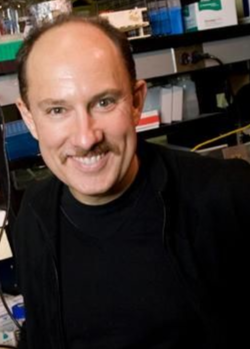
“Fungal Kingdom has served to bring a group of dedicated colleagues together to work on problems of global significance,” Heitman said.
The program meets twice yearly and has convened a series of antifungal drug summits that have accelerated global efforts to develop new antifungal therapies. One key outcome has been CIFAR’s role in helping cultivate support from BARDA for two phase III clinical trials conducted by Basilea in Basel, Switzerland, for its lead antifungal candidate, fosmanogepix. The trials could receive up to $268 million in support.
The program also invests in early career scholars. At Duke, Asiya Gusa, PhD, assistant professor of molecular genetics and microbiology, was selected as an Azrieli Global Scholar through the initiative.
CIFAR funds global, long-term collaborations designed to confront “horizon challenges”—complex problems that cannot be solved through incremental research alone.